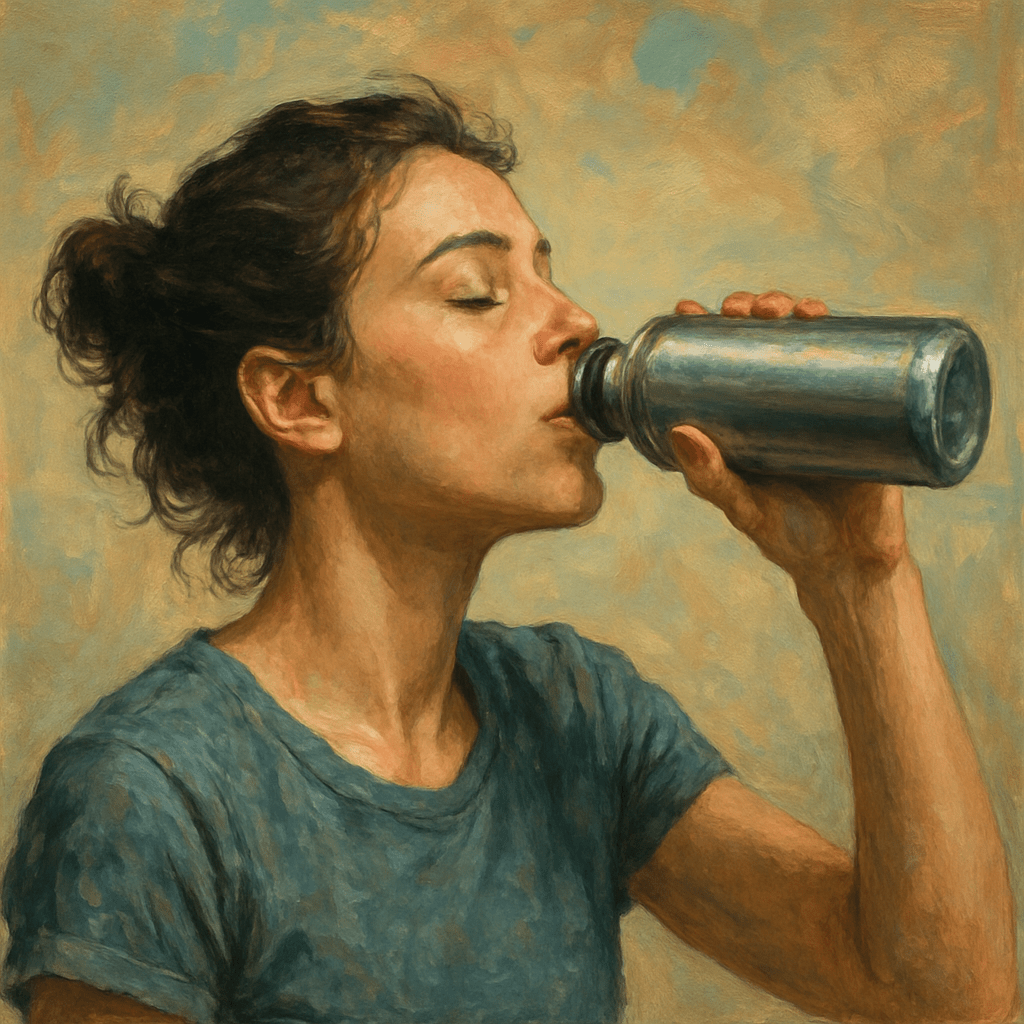
I never paid much attention to how much water I drank. Unless I was exercising, I rarely felt thirsty. I’d take a sip now and then, but I didn’t think about it. A few years ago, even though water was the only thing I drank, I decided to measure my daily intake. It was about 60 ounces. Not nearly enough. I now track my consumption to make sure I get what my body actually needs. You may wish to do the same.
Water is not just something we drink; it’s the substance that keeps us alive. Roughly 60 percent of the human body is water, and every organ depends on it. It stabilizes temperature, cushions joints, fuels muscles, and removes excess sodium and waste through urination, perspiration, and bowel movements. Because we lose water continuously—every hour of every day—we have to replenish it to keep our bodies functioning. Water also supports digestion, carries oxygen and nutrients to cells, keeps our heartbeat and blood pressure steady, and may reduce the risk of cancer, heart disease, kidney stones, and stroke. Our hearts, lungs, and muscles rely on water to do their jobs. The truth is simple: we need water not just to feel well, but to live well.
How much water we need is often misunderstood, but there is a useful rule of thumb: drink about two-thirds of your body weight in ounces per day, plus roughly 12 ounces for every hour of exercise. A 100-pound person might aim for about 79 ounces a day if they exercise regularly; at 150 pounds, that number rises to about 112 ounces. Federal guidelines are similar. The USDA recommends about 104 ounces per day for men and about 72 ounces for women, though foods rich in water—like cucumbers, tomatoes, grapes, celery, or watermelon—help supplement your intake.
Timing matters as well. Drinking before meals helps with fullness, digestion, and calorie control. It’s best to avoid drinking large amounts during the meal so your body can absorb nutrients efficiently, but drinking afterward is fine. Water before sleep gives your body what it needs to rest and repair, and drinking when you wake up replenishes what you lost overnight. Hydrating before a workout gives your muscles the fuel they need, and drinking afterward helps your body recover.
How we drink water matters too. Single-use plastic bottles pose significant health risks, pollute oceans, kill marine life, and contribute to fossil fuel emissions. Safer alternatives include tested tap water, filtered water, and reusable glass or BPA-free metal bottles. Hydration should not come at the cost of the planet.
I’ve been drinking only water for about 30 years, and it has served me well. Staying hydrated is one of the simplest, cheapest, and most transformative health decisions we can make. If you want a small change that pays off every day—and protects the planet along the way—start with water.

 Kirschner's Korner
Thank you, This is very important…it is also important to suggest people drink tap water; if their water is tested & clean. In NYC the water is excellent. Yet, so many people use filters or buy bottled water. It is a waste and adds to the already full plastics pollution. The added fluoride really has cut down on cavities. If a baby keeps a bottle in it’s mouth it is no going to cause teeth damage if it is a bottle of water. Of course=breast is best.