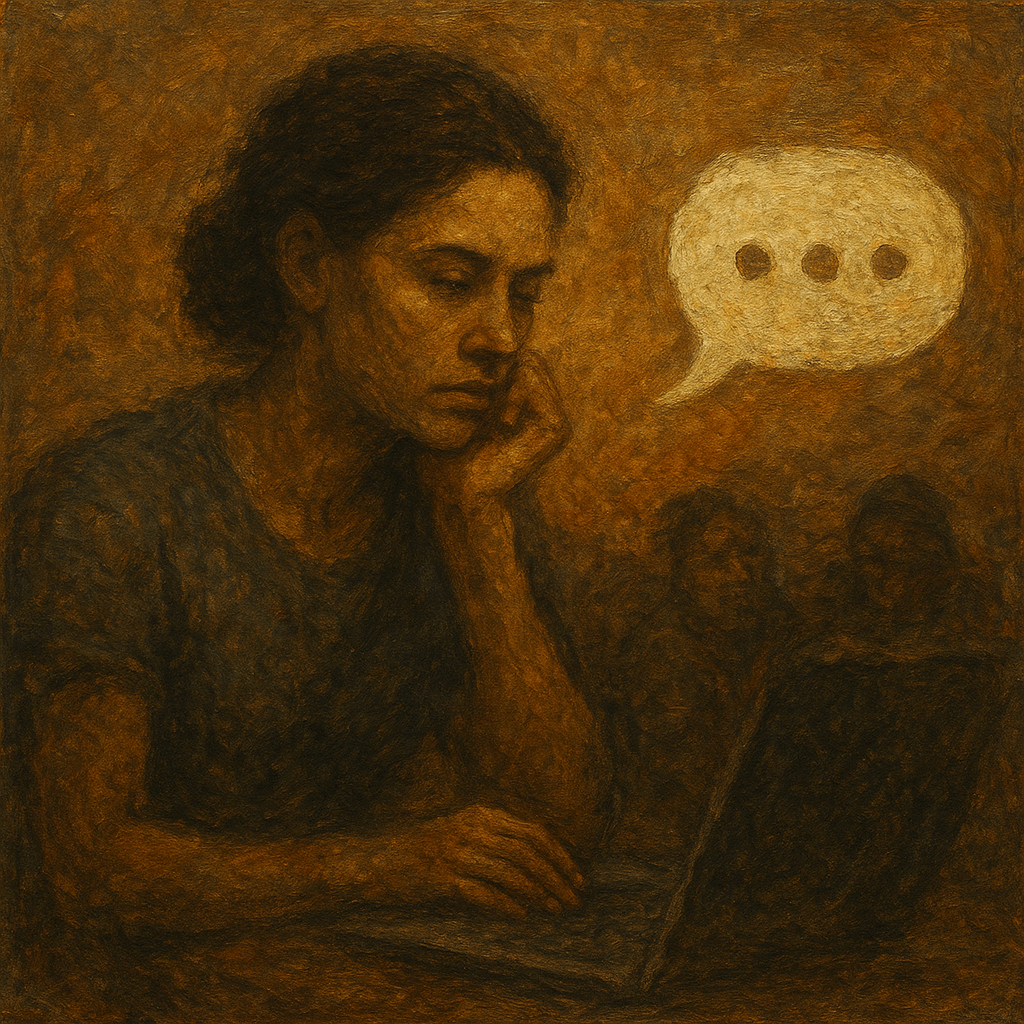
We’ve all been there. You share a thoughtful post about education reform, climate change, or a local community initiative — and within minutes, someone appears in your comments to accuse you of bad faith, hypocrisy, or hidden motives. You try to engage respectfully, but soon you’re being told you’re part of a conspiracy, a shill for some shadowy organization, or simply a “terrible person.” You pause, blink at the screen, and ask yourself the question everyone asks after a toxic online encounter: What’s wrong with these people?
The answer is complicated, but one truth is clear — social media has turned ordinary disagreement into combat. Platforms that once promised connection now reward outrage, certainty, and tribal loyalty. It’s not just about politics or ideology anymore; it’s about identity. Whether it’s an argument over public health, immigration, or a local school board vote, the goal isn’t to persuade — it’s to win, humiliate, and dominate.
Consider the way political debates unfold online. A candidate posts a policy proposal about healthcare. Within minutes, the comments devolve into accusations of socialism or corporate greed. Someone posts a simple message about voting — and is told their vote doesn’t matter, that democracy is dead, or that they’re part of a corrupt system. Even well-meaning advocacy posts about gun safety, housing, or women’s rights can draw waves of vitriol from people convinced they’re defending “the truth.” The tone is so unhinged, so disproportionate, that it leaves reasonable people questioning whether engaging is even worth it.
For advocates — people trying to improve the world through activism, education, or community work — the online hostility can be especially draining. It’s not just unpleasant; it can derail progress. A single bad-faith actor can hijack an entire conversation, pulling focus from the real issues and turning dialogue into performance. You can spend hours crafting a clear, factual explanation only to find yourself arguing with someone who isn’t interested in facts at all.
So what can be done? First, recognize that not every argument deserves your time. The internet is full of people shouting into digital voids, desperate for attention, validation, or a sense of control. When you encounter someone who misrepresents your words, refuses to engage in good faith, or simply wants a fight, the healthiest thing you can do — for yourself and for your cause — is to walk away. You are not required to attend every argument you’re invited to.
This isn’t cowardice; it’s discipline. Social movements and public advocacy require energy, focus, and emotional endurance. Wasting that on the chronically angry or perpetually offended does nothing to advance your mission. Block or mute people who thrive on chaos. They will accuse you of censorship, hypocrisy, or weakness — but that’s noise. The truth is, those who are genuinely curious or open-minded will stay in the conversation. The rest are performing.
Keeping perspective is equally essential. For every hateful comment or misinformed critic, there are real people quietly learning from your message. Most readers will never comment — they’ll absorb, reflect, and move on. The loudest voices online are rarely the most representative. Step back, breathe, and remind yourself of what actually matters: your purpose, your community, and your impact beyond the algorithm.
It also helps to reconnect with the real world. The most effective advocates — from community organizers to public servants — build coalitions through relationships, not retweets. The digital space can amplify your work, but it should never define it. Meet people face-to-face, attend local events, volunteer, and have difficult conversations in person. It’s harder to demonize someone you’ve shaken hands with.
And when the dark side of the online world starts to impacts you, let it go. You will not remember every insult, every false accusation, every stranger who tried to provoke you. What you will remember are the people who listened, the moments you helped, the progress you made.
Social media isn’t inherently bad — it’s a tool. But like any tool, it can be misused. In an age when misinformation spreads faster than truth and outrage outperforms empathy, the most radical act might simply be to stay calm, stay kind, and stay focused. The world needs fewer digital warriors and more real-world builders.
The next time you find yourself pulled into an unhinged online argument, remember: your purpose is not to win debates with the unpersuadable. Your purpose is to make an impact that lasts longer than a thread or a tweet. Log off, take a walk, talk to someone who matters, and get back to doing the work that does.

 Kirschner's Korner
Really well stated and well reasoned, Andrew. Great job.
Sherry L. Schlueter
Executive Director, South Florida Wildlife Center
Thank you Sherry. It’s great to hear from you. You’re an outstanding example of a leader who takes the high road and stays focused on rescuing animals and teaching people how to show compassion for them.
People who block people on Facebook should be killed and if you don’t agree, you should be killed too!
Ok, just kidding! 🙂 This is an excellent post with excellent advice, Andrew. It’s ironic, but if I was on Facebook I’d share it there.
I highly recommend taking a Facebook break every so often. I deactivated my account about 2 years ago specifically because I was so tired of and fed up with all the drama there. I thought I’d just take a break for a month or so, but I have yet to go back.
Take a break from Facebook every once in awhile, even if only for a day or two. The world won’t stop spinning and you might be pleasantly surprised at how nice it is to be away from all the drama there.
p.s. I try to also keep in mind that for whatever reason, people will say things and be as nasty as last week’s garbage left out in the hot sun when they are online, but they would never dare to behave that way or say those things if they were face to face with the person.
Very true Christine! Very true, indeed. Nice hearing from you.
People have “social media bravery” which gives them this false license to bully and berate and have tantrums. Since in the physical world they wouldn’t get away with that behavior, they use social media as their opportunity to act that way. keep up the good work and don’t let those people take 1% of your positive energy. No room for energy vampires!!!
Sage advice Monica. Thank you for sharing your thoughts with everyone.
I belong to a local email blog/newsletter that involves the surrounding neighborhoods. Complaining, bullying, nuttiness comes out even in that simple forum!
What I really have trouble with, are all the graphic “informative” pictures and descriptions of horrific animal abuse here and abroad on FB. On one hand if I scroll past and try to block out the images I feel like a coward. On the other hand if I truly entertain what is happening out there I sink into total despair. I do my little bit by eating vegetarian and contributing to some charities ie: 100+Abandoned Everglades Dogs, PCRM, Wildlife Center, Grey2K. It seems trivial though when I see others who make it their life’s mission to crusade for the vulnerable.
Christine
Hi Christine,
You raise several interesting points. Thank you for your candor.
You don’t have to be someone else. People have different ways of advocating and advocate with varying degrees of passion. The fact that you’re doing something is meaningful. It’s up to you, and you alone, if you would like to take additional steps to help animals.
It was nice hearing from you!
Hi Christine from another Christine… 🙂
I completely agree with Andrew..the fact that you are actually just doing something is very meaningful.
One of my favorite quotes is actually from a Little Richard song which goes, “A little bit of something beats a whole lotta nothing.” Not that what you are doing is a “little bit”…just to be able to face what is happening without turning away takes more courage than many people. So many others out there do know what is going on, but they choose to ignore it. By choosing to simply acknowledge the truth, you have already shown A LOT of courage. You have gone even further than most by eating vegetarian and contributing to those wonderful charities…that’s nothing to scoff at!
And I can completely relate myself to where you wrote, “On one hand if I scroll past and try to block out the images I feel like a coward. On the other hand if I truly entertain what is happening out there I sink into total despair.”
I used to feel it was my duty somehow to watch all the undercover videos and pictures that came my way. I felt I needed to bear witness for these horribly abused animals. I now realize that once you have gathered enough information to be educated, it can actually become very detrimental to your health, both mental and physical, to continue viewing disturbing images if they no longer add anything new to what you already know.
When this happens, people set themselves up for burnout, compassion fatigue and vicarious trauma. I found out about these things only after I started to experience them and I didn’t understand what was going on. I now understand that it’s wise to monitor how much graphic information you take in, especially if it doesn’t add anything to what you already know.
You may be interested in and I highly recommend In Defense of Animals (IDA) Sustainable Activism Campaign. They offer free webinars, blog posts, a toll-free hotline and free email support, and they also have a YouTube channel featuring recordings of their webinars and short ~1 minute “Sustainable Activism Tips”.
http://www.idausa.org/sustainable-activism/
An example you may want to check out is this recording from a webinar called “Despair Repair”:
Anger, sadness, and despair often go hand in hand with awareness of the state of the world. This session will look at ways to turn the emotions into healthy positive action. With a few simple tools, you will be able to remain a strong positive voice for all beings and the planet we call home.
Sorry, I didn’t mean to write so much! Thank you for all that you are doing, Christine! 🙂
Thank you so much. I will check out the links after work today.
You’re very welcome, Christine. If you’d like any more info on the topics I touched on, please feel free to email me at clof101@gmail.com. I know of many other books, websites, etc., that have helped me through the hard parts of activism work that I’d be happy to share with you.
And sorry I’ve taken up so much space in the comments, Andrew. I forget that sometimes the actual video will be posted when I include a YouTube link. More derp points for me! 😛
This is very informative as well. Thank you.
Fabulous advice – shared!
Much appreciated Roy. I’m glad you found it useful.
This situation is more of a challenge when the “crazy-maker” is a family member. It’s not as easy to unfriend, block them or call them out. Sometimes you just have to consider the source and move forward.
Very true! You will need a different set of coping skills for that one!
If people want respectful discourse, I’m up for reciprocating. But if someone comes at me with immediate and obviously angry, trolling, baiting, argumentative statements, I just don’t invest the time or the energy. I understand though how some will try their very best to engage and inform those who are obviously up to no good. As it’s always been said, “don’t feed the trolls.” But some think, well, behind that faceless wall of internet anonymity, they’re still a human being too. But the cold, hard fact is some so-called humans just want to fuck with you, and that’s it. They’re not there to be educated, informed, enlightened, make friends, etc. When you recognize this, it’s easier to assess and disconnect, when it’s appropriate.