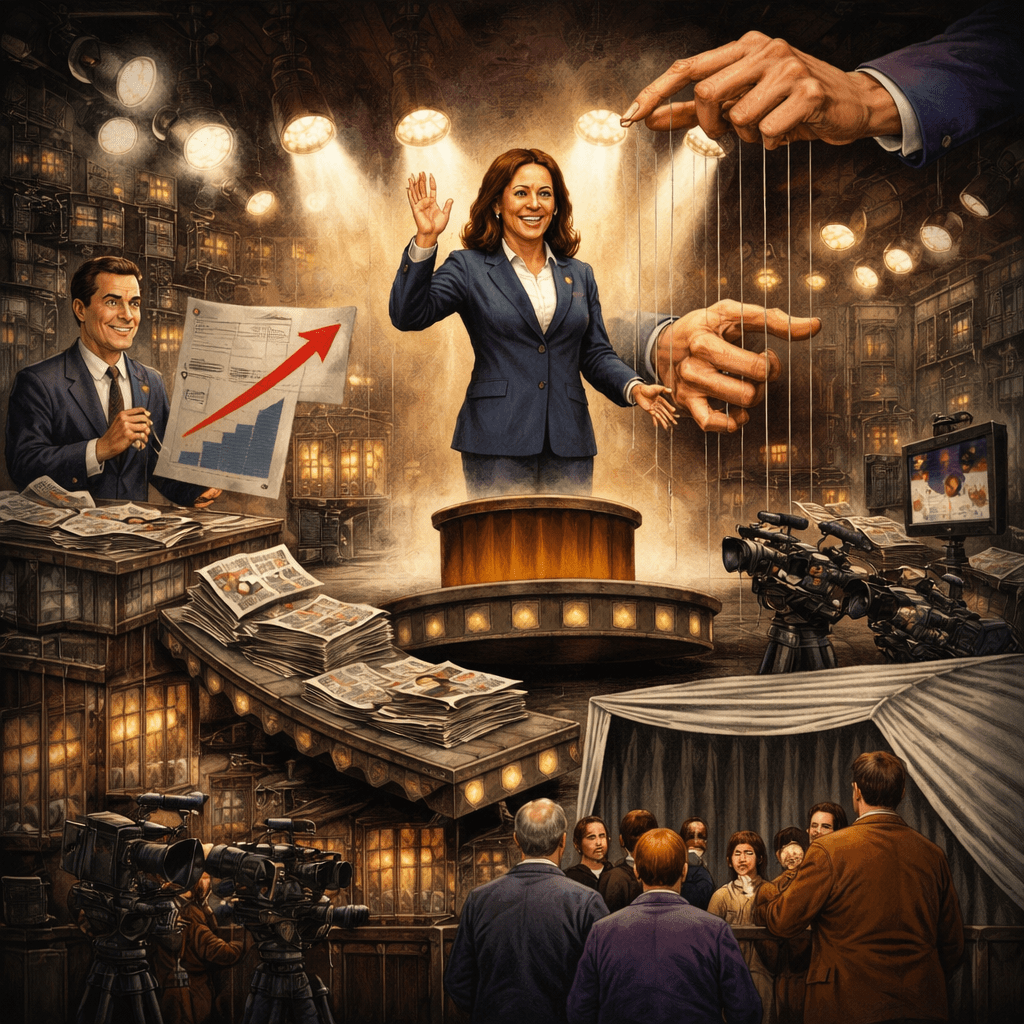
The speed with which segments of the American liberal media and polling industry have moved to reinstall Kamala Harris as the presumed Democratic frontrunner for 2028 is not just premature—it is emblematic of a deeper dysfunction in how political narratives are constructed and imposed on the public.
Less than a full election cycle removed from her loss to Donald Trump, Harris is already being buoyed by headlines touting double-digit leads in hypothetical primary matchups that exist only on paper. These polls are not merely speculative; they are fundamentally detached from any meaningful democratic process. No candidates have declared. No debates have taken place. No policy visions have been presented to voters. Yet the media is already signaling: the choice has effectively been made.
This is not analysis—it is narrative manufacturing.
Harris’s recent political history makes this early elevation even more striking. During the 2020 Democratic primaries, Kamala Harris failed to gain traction with voters, polling in the low single digits and withdrawing before a single vote was cast. In early states like Iowa and New Hampshire, her support hovered around the margins. Her vice presidency did little to reverse concerns about her political strength, with approval ratings that frequently lagged behind expectations and ranked among the lowest in modern political history. And in 2024, she did not secure the nomination through a competitive primary process but was elevated under extraordinary circumstances, bypassing the kind of voter scrutiny that defines democratic legitimacy. In the general election, she went on to lose all seven major swing states to Donald Trump, underscoring the challenges she faced in building broad electoral support.
That context makes today’s polling-driven coronation feel less like a reflection of voter will and more like an attempt to overwrite it.
The damage of this pattern goes beyond any single candidate. When media outlets amplify early, hypothetical polling as if it carries real predictive weight, they distort the political playing field. Voters are subtly conditioned to view certain candidates as “inevitable” before they have had any meaningful opportunity to evaluate alternatives. Donors follow the perception of inevitability. Potential challengers are discouraged from entering the race. What should be an open contest of ideas instead becomes a managed outcome.
In effect, the democratic process is being front-loaded—and foreclosed.
This is especially troubling given how little these early polls actually measure. At this stage, they are almost entirely reflections of name recognition, media exposure, and residual familiarity from prior elections. They do not capture informed opinion because the public has not yet been informed. Treating such data as substantive is not just analytically weak; it is civically irresponsible.
A healthy democracy depends on an engaged electorate making choices based on competing visions, tested arguments, and transparent debate. But when the media signals a preferred outcome years in advance—before candidates emerge and before voters engage—it risks replacing democratic deliberation with passive acceptance.
The pattern is hard to ignore: elevate a familiar figure, reinforce their inevitability through polling, and allow that perception to shape the race before it even begins. Whether intentional or not, the effect is the same—the narrowing of democratic choice.
A more responsible approach would require restraint. Pollsters should recognize the limits of their tools and refrain from publishing speculative matchups devoid of context. Media organizations should treat such polls with skepticism rather than amplification. Most importantly, both should allow the political process to unfold before attempting to define it.
Because when the story of an election is written years before the first vote is cast, it is not just the candidates who are being sidelined—it is the voters themselves.

 Kirschner's Korner
I was pleased to read your post, and as usual, you are spot on. The current Democratic elite are clueless which is how Trump won so easily by forcing a candidate America is not ready for.