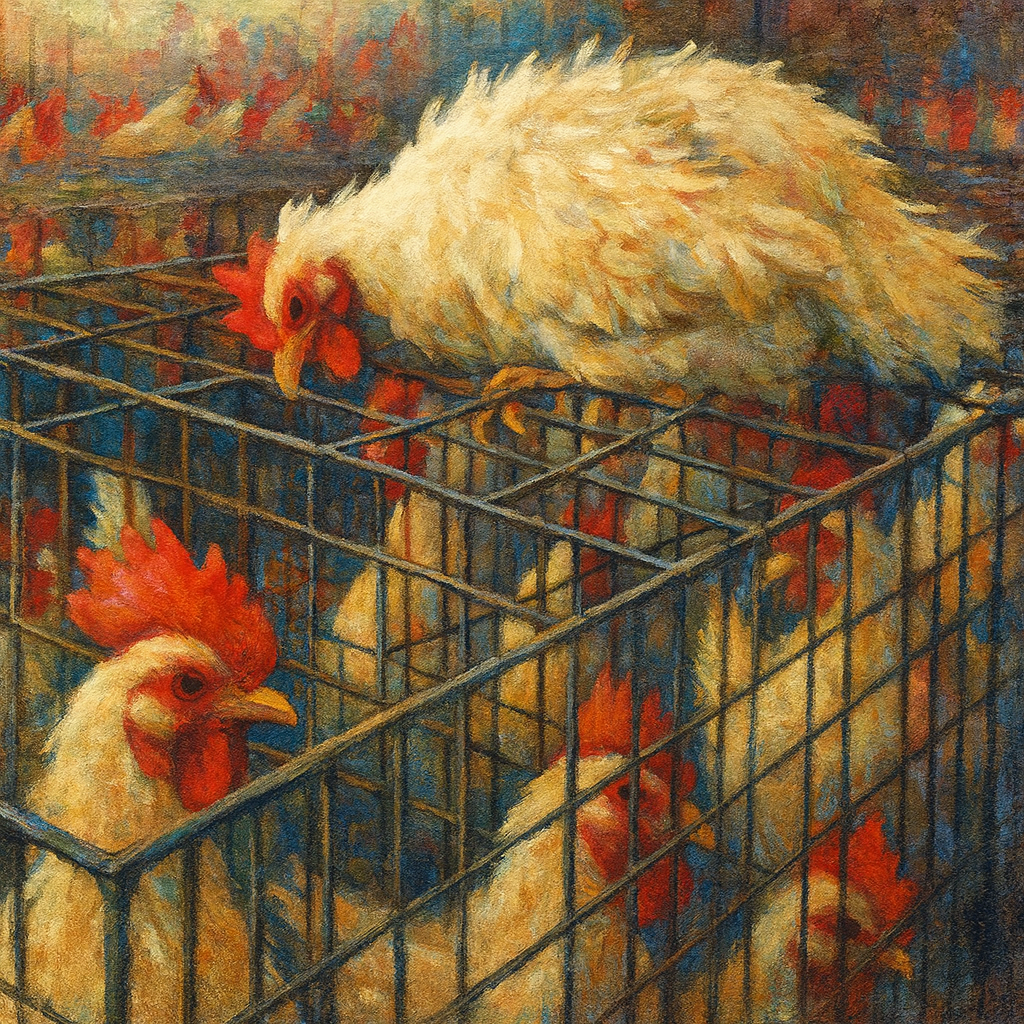
Millions of Americans say they care deeply about animals, and the data bears that out. A Gallup poll found that 96 percent of Americans believe animals deserve at least some protection from harm and exploitation, and a striking 25 percent say animals deserve the same rights as people to be free from harm altogether. While our daily choices do not yet match these convictions, the gap between values and behavior suggests something important: public sentiment is not the obstacle. The opportunity is.
For those who want to help animals, the harder question is not whether to act, but how to do the most good. Too often, advocacy follows instinct rather than evidence. People gravitate toward the causes that feel most emotionally satisfying or publicly visible, even when those efforts may save relatively few animals. Good intentions are not enough. If the goal is to reduce suffering at scale, animal advocates need to think more strategically about where their time, energy, and resources will matter most.
The uncomfortable truth is that most animal suffering happens far from public view. Campaigns against zoos, circuses, rodeos, and seaquariums rightly call attention to cruelty, confinement, and exploitation. But measured by sheer numbers, these industries account for a tiny fraction of the harm humans inflict on animals each year. In the United States, roughly 2.7 million dogs and cats are euthanized annually in shelters. Laboratory research involves an estimated 115 million animals. Sport hunting kills about 200 million animals. Fur farming accounts for roughly one billion. All of these figures are staggering—and yet they are dwarfed by animal agriculture, which kills approximately 56 billion land animals and an estimated two trillion aquatic animals globally every year.
That imbalance matters. Nearly all animal killing—roughly 98 percent—occurs in the production of food. Only about 3 percent of Americans refrain from eating animals. If advocates care equally about all animals, regardless of species, it becomes difficult to justify allocating most advocacy efforts to causes that affect comparatively few lives.
This is not an argument against tackling smaller or more visible injustices. Ending the use of animals in entertainment or shutting down a particularly egregious facility can have symbolic power. Closing a place like SeaWorld, for example, may spare dozens of animals from confinement and suffering and could help shift public attitudes in ways that ripple outward. Those indirect effects are real, even if they are difficult to quantify.
But when it comes to direct, measurable impact, the numbers point overwhelmingly in one direction. Encouraging someone to stop eating animals saves an estimated 466 animals every year—more than 4,600 animals over a decade. Few advocacy efforts can claim such immediate and sustained results from a single change in behavior. Multiply that effect across communities, institutions, and food systems, and the potential impact becomes enormous.
The question, then, is not what kind of advocacy feels most righteous or emotionally rewarding, but what saves the most lives. If effectiveness matters—and it should—then promoting plant-based food and reducing reliance on animal agriculture deserves far more attention than it currently receives. This approach aligns moral concern with scale, urgency, and practicality.
None of this suggests that the movement has all the answers. It may be that pursuing multiple strategies simultaneously yields greater long-term change, or that certain symbolic victories accelerate broader shifts in public consciousness. These questions warrant further research and honest debate. But ignoring the numbers is no longer defensible.
For a movement rooted in compassion, confronting uncomfortable facts is an act of integrity. The vast majority of animal suffering happens on our plates, three times a day. If advocates truly want to reduce harm, they must be willing to focus less on what feels good and more on what works. The disparity in impact is not just surprising—it should fundamentally reshape how we think about helping animals.

 Kirschner's Korner
I had NO idea that fur farms raise and kill 1 billion animals yearly. That is a sickening realization. For some reason, my sister and I were taken to a chinchilla farm when we were very young, but we had no idea why the little animals were in cages stacked one on top of another. I’m pretty certain I believed that they would become pets. When I learned the truth, it was very shocking to my tender heart. Current statistics on the numbers of animals killed by people yearly are again shocking.
Hi Ellen,
Thank you for sharing your thoughts. Indeed, the numbers are staggering.