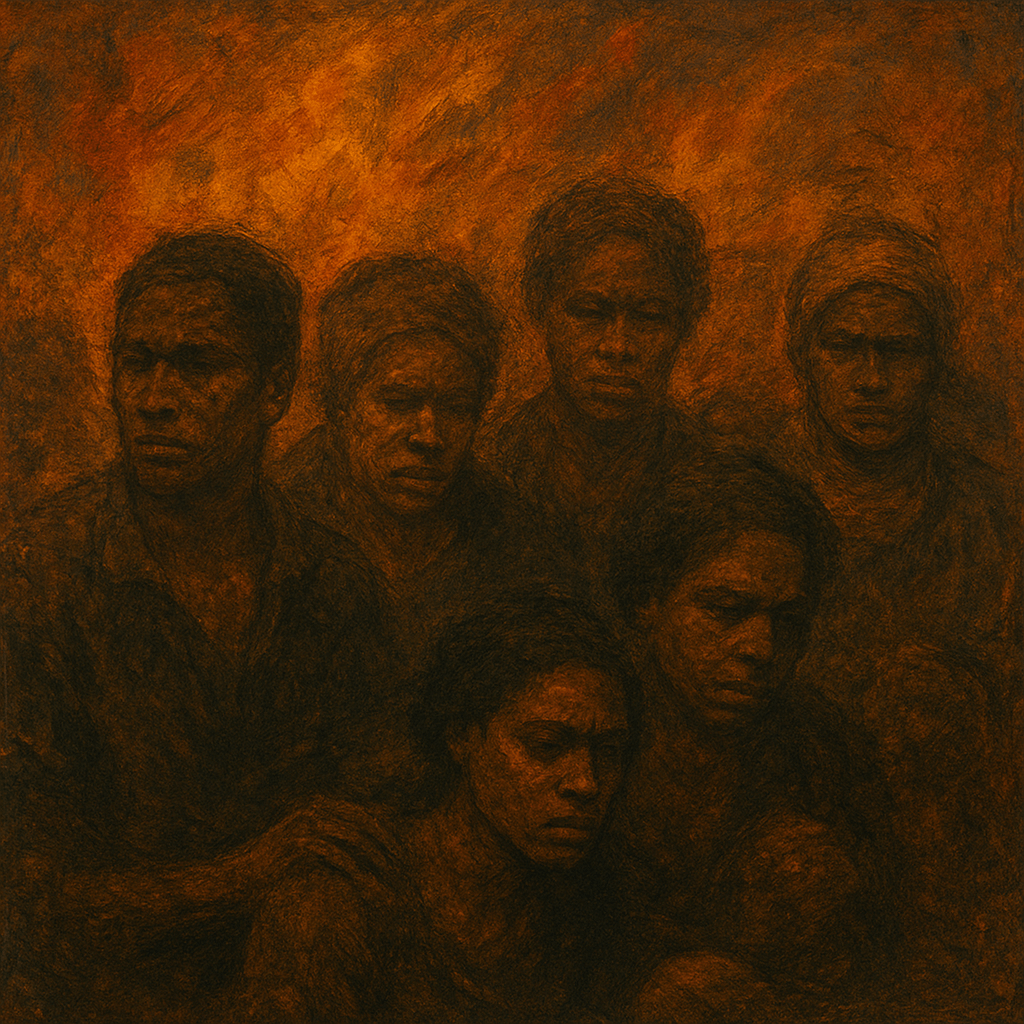
The media’s coverage of the Paris terrorist attacks reminds us that not every life is treated as equally important. Too often, the worth of a life is measured by the scale of media coverage, the level of government intervention, and the intensity of public reaction. By those measures, it becomes clear: some lives matter, some matter a little, and some barely matter at all.
This isn’t to say the Paris attacks were not deserving of attention—they were horrific and heartbreaking. But we should also ask why people assign varying degrees of worth to different human lives, and whether our collective empathy is guided more by moral principle or by what appears on the evening news.
If we don’t think for ourselves, the media thinks for us. The mainstream press—largely a collection of for-profit corporations that never met a hurricane or a scandal they didn’t like—cares foremost about ratings and revenue. When we let them decide what matters, our attention follows the money, not our values.
Where is the wall-to-wall coverage of starvation, disease, the Beirut terrorist attacks, the Boko Haram massacres, or the quiet suffering caused by animal agriculture? The same week the world lit up in blue, white, and red, much of humanity’s ongoing pain went unacknowledged. The pattern is instructive: when the media tells us a story is worthy of our sympathy, we unite around it. When it doesn’t, we look away.
The media’s disproportionate focus on certain kinds of tragedy doesn’t just distort our perception—it fuels fear, which drives viewership and profits. A ratings-driven news cycle is drawn to terror in Paris more than terror in Nigeria, not because one tragedy is worse than the other, but because one draws more eyes to the screen. Meanwhile, this obsessive focus gives extremists precisely what they crave: attention, fear, and a global stage.
Some lives matter more than others—at least to the media, and by extension, to the public it shapes. The lives of people who look familiar, live in allied nations, or occupy positions of wealth, beauty, or fame are deemed more “valuable.”
If you are white, attractive, and missing, your life matters. If you are wealthy, famous, or play professional sports, your life matters. If you are famous for doing nothing but being famous, your life still matters. If you can sing, your life matters. If you are an athlete found using drugs in a hotel room, your life matters. And if you are attacked in a city the world recognizes—especially one where tourists go—your life matters most of all.
These are the stories the media amplifies, while much of the public—lulled by repetition and spectacle—mistakes visibility for importance.
Other tragedies barely flicker across our screens. They earn a passing mention before fading into obscurity.
The lives of passengers killed on a plane from a country we don’t consider an ally matter a little, but not much. The deaths of doctors volunteering in war zones matter a little, but not enough to change a Facebook profile photo. The kidnapping or murder of poor, nonwhite, or less “telegenic” children rarely generates the national outcry reserved for JonBenét Ramsey, Elizabeth Smart, or Natalee Holloway.
For this middle tier of tragedy, we feel brief sadness, maybe outrage, and then move on.
And then there are the lives that barely register. The lives of people who live far away, who are poor, who are not white, or who die quietly from preventable causes—these lives are largely invisible. The innocent civilians killed in wars we wage or fund, the victims of police brutality, the refugees displaced by conflicts we ignore—these are lives that don’t make the evening news.
The day before the Paris attacks, ISIS killed 43 people and wounded 200 in a Beirut neighborhood. The world barely noticed. Boko Haram has slaughtered tens of thousands and kidnapped countless women and children in Nigeria. Millions have been forced from their homes. Their lives, too, have gone largely unacknowledged.
According to the United Nations, approximately 21,000 people die from hunger every day. Is starving to death less painful than being shot? If the goal is to save lives, why do we mobilize entire nations to respond to one kind of tragedy while ignoring another that kills exponentially more people—people we could help right now?
We also ignore slow-moving crises that claim far more lives than terrorism ever will. Each year, 36 million people die from noncommunicable diseases like heart disease, cancer, and diabetes. Where is the urgency? The round-the-clock coverage? The political mobilization? Even organizations meant to address these problems often mirror the same inequities, led by executives earning seven-figure salaries while promoting half-measures that preserve the status quo.
And beyond humanity, there are the animals—those who suffer and die by the billions in factory farms, laboratories, and entertainment venues. When 13,000 chickens die in a slaughterhouse fire, it barely makes the local paper. When billions are killed for food each year, it doesn’t matter at all. The way we assign worth—to humans and to animals—is a reflection of the same flawed moral hierarchy.
The problem isn’t that people care about Paris—it’s that we stop caring once the headlines fade, and that we reserve empathy for those who resemble us. By following the media’s agenda, we become participants in a culture that selectively decides who deserves sympathy, support, and outrage.
If you look at the photos of Boko Haram’s victims, burned and beheaded, and ask, “Why don’t these lives matter as much?”—that question alone is a moral awakening. If you eat animals and ask, “Why don’t their lives matter as much as the pets we love?”—that, too, is moral awakening.
The truth is simple: there is no moral difference between a person and an animal running from terror. We may naturally grieve more deeply for those we know, but when it comes to strangers, all innocent life deserves equal compassion. The victims without militaries, hospitals, or social media campaigns are precisely the ones who need our attention most.
To change our culture, we must stop letting others decide whose pain deserves notice. We must think for ourselves, broaden our moral imagination, and defend all innocent life—human and nonhuman alike.
I understand the shock of the Paris attacks. To see the “City of Love” consumed by violence felt like an assault on civilization itself. But that doesn’t make those lives more valuable or those deaths more tragic. It only feels that way because we’ve been conditioned—by our media, our politics, and our culture—to care unevenly.
We can’t fully imagine what it feels like to be burned alive, bombed, shot, confined, or smothered to death. But we can imagine that it’s unbearable for every victim, everywhere. And if we can imagine that, we can choose to live differently.
Every innocent being—human or animal—deserves our empathy, respect, and protection. The moral task before us is simple but profound: to act as though we believe it.

 Kirschner's Korner
someone posted about the people that did these attacks as animals..I told her excuse me but they were human, animals would never do this only humans exhibit this kind of deviant, abusive behavior!
Excuse me, but the last I learned was that we are animals, only a different kind (species) of animal that happened to be the most violent on earth.
Thank you. That is such an important point to make!
This is one of the best most powerful pieces I’ve read of yours. Thank you. Will share widely.
-Sadly, we have become a culture of media soundbite junkies, and most rarely read a full article anymore.
This was so perfectly written Andrew ❤
Excellent. I love it. I thought it was wonderful, insightful, and thought-provoking on crucial matters. Great points. Love the parallel towards the end. You’re such a talented writer.
Well, Andrew, you have inscribed precisely what I have been thinking as this relentless coverage has, once again, invaded every conceivable crevice. Just as when the outrage over Cecil’s murder utterly failed to connect that event to the comprehensive devaluation of ALL animal lives, becoming a discrete cause celebre, this becomes important only because a Western country, a “civilized” country, has been targeted. The relentless slaughter, suffering, sectarian violence, starvation that is the daily reality in Africa, Asia, the Middle East, Southeast Asia fails to resonate because those lives do not matter, they are “other” and they are unseen. Just as when those who eat and exploit animals vociferously object to being shown the savage brutality of how their “products” are brought to them, so, too, do they refuse to acknowledge our shared responsibility to protect all life, not merely that which looks and talks as we do.
OMG! This is so true!!!! Awesome writing!!
Donna Schiller TopSpot4U.com Sent from my iPhone
>
Can we share his on Facebook? With your name credit of course!
Donna Schiller TopSpot4U.com Sent from my iPhone
>
Yes, thank you Donna.
I would like to translate it into Portuguese with a BIG credit to you, may I?
Yes, thank you Thaty. You have permission. Very kind of you.
Well hell Andrew, you should just marry me. As always you collected my emotional and scattered thoughts and put them together in a logical format I was able to get a handle on. Whew…thank you for that. I love your writing and you never disappoint. I’m a knee jerk reactor and it doesn’t take me long to drive myself crazy trying to organize thoughts and feelings and come up with an opinion not overshadowed with emotional overload. I particularly needed this piece. The monsters in my head are silent for the first time in 4 days. Yes…someone gets exactly what I feel and has the clarity to commit it to paper. You are my literary hero.
Wow, well said Andrew, how true and we need con stant reminding
Sent from my iPhone
>
So powerfully said. Thank you for sharing your writing with us.
You have totally captured my thoughts. This is exactly how I felt hearing about the Paris attacks. Thank you 🙂
One of the best & most poignant articles I have ever read. I concur!!!!
Excellent. Just shared on Twitter.
Andrew: Thanks so much for once again taking the time to write such a provocative piece. So many of us appreciate your writing talent, and that you harness our thoughts and present them so eloquently that it enables us to share them with others, and with hope for a more compassionate world.
Brilliant Andrew. Thank you for sharing your wisdom.
‘Just so beautifully written. Wow!
Thank you for your kind remarks. I encourage everyone to read this article that compares the threat of terrorism to climate change.
http://www.nytimes.com/2016/03/24/opinion/terrorists-bathtubs-and-snakes.html?emc=edit_nk_20160323&nk=true&nl=nickkristof&nlid=74379246&te=1&_r=0
Beautifully written. I eat less meat because of how horribly treated those animals are.
Thank you Jessica. I’m glad that the images impact you and that you are taking steps that reflect how you feel.